
Architecture for a Hotter Planet: Designing the Built Environment for a Changing Climate.
Introduction: The Climate Reality
According to long-term Earth indicators monitored by NASA, global temperatures have been on a steady upward trajectory since the onset of the Industrial Revolution. This warming trend is fundamentally driven by the accumulation of greenhouse gases—such as carbon dioxide, methane, and nitrous oxide—trapping heat within Earth’s atmosphere.
To understand where this trajectory leads, scientists rely on climate models provided by the Intergovernmental Panel on Climate Change (IPCC). These models evaluate various socioeconomic pathways and policy choices, mapping out how the planet will respond depending on human action.
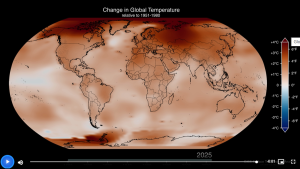
Temperature Projections by 2070
The IPCC models outline several trajectories for global warming by the year 2070, relative to pre-industrial levels:
-
Low Emissions Scenario: Warming by 2070 is projected to hover around 1.5°C to 2.0°C. (2.7°F to 3.6°F) This requires aggressive, immediate global decarbonization, transitioning rapidly to renewable energy and achieving net-zero emissions globally by mid-century.
-
Intermediate Emissions Scenario: Global temperatures are projected to rise by roughly 2.1°C to 3.5°C. (3.8°F to 6.3°F
-
) In this pathway, emissions peak and plateau later in the century, leading to severe disruptions in weather patterns, sea-level rise, and prolonged heatwaves.
-
High and Very High Emissions Scenarios: If no substantial policy action is taken and fossil-fuel reliance continues unabated, warming by 2070 could easily reach 3.3°C to 4.8°C ( 5.9°F to 8.6°F) (or higher) above pre-industrial levels. Such an increase would fundamentally reshape ecosystems, strain global food and water security, and make large parts of the equatorial world challenging to inhabit without artificial cooling.
While these numbers depict a sobering future, global warming is not an unstoppable monolith. The escalation of temperatures can be slowed and eventually stabilized through comprehensive, sustainable strategies implemented at every level of society—foremost among them being how we design, construct, and manage our built environment.
The Role of Architecture in a Warming World
The building and construction sector is uniquely positioned at the crossroads of climate change. Globally, buildings and their operations account for a massive share of total greenhouse gas emissions. At the same time, the built environment is acutely vulnerable to rising ambient temperatures.
As outdoor temperatures climb, reliance on mechanical air conditioning skyrockets, creating a vicious feedback loop: cooling buildings demands more electricity, which—if generated by fossil fuels—pumps more greenhouse gases into the atmosphere, further warming the planet. Breaking this cycle requires a paradigm shift in architecture, moving away from energy-intensive structures toward climate-resilient, adaptive design.
Key Architectural Strategies for Extreme Heat
To combat rising temperatures by 2070, architects, urban planners, and engineers are integrating several vital methodologies into modern design:
1. Passive Cooling and Natural Ventilation
Rather than relying exclusively on mechanical HVAC systems, modern architecture is looking backward to vernacular traditions. Techniques such as cross-ventilation, high ceilings, thermal chimneys, and windcatchers allow buildings to circulate and exhaust hot air naturally, drastically lowering baseline energy demands.
2. Advanced Shading and Dynamic Facades
Solar heat gain is a primary driver of indoor warming. Implementing exterior shading devices—such as vertical louvers, horizontal overhangs, dynamic smart-glass, and kinetic facades—blocks intense summer radiation before it penetrates the building envelope, while still allowing beneficial winter sun to enter.
3. Cool Roofs and High-Albedo Materials
Traditional dark roofs absorb solar radiation, transforming buildings and cities into massive heat sinks—a phenomenon known as the urban heat island effect. Utilizing cool roofs, which feature high-albedo (reflective) coatings and white or light-colored materials, reflects sunlight away from the structure and keeps ambient microclimates cooler.
4. High-Performance Thermal Enclosures
A hotter planet requires insulation that works both ways: keeping cold air in during extreme heat waves and blocking thermal transfer. Continuous exterior insulation, multi-pane low-emissivity (Low-E) glazing, and airtight building envelopes ensure that internal climates remain stable with minimal energy input.
5. Urban Greening and Biophilic Integration
Architecture does not stop at the exterior wall. Integrating green roofs, vertical living walls, and surrounding native urban forestry provides natural shading and evaporative cooling. Vegetation absorbs less heat than concrete and asphalt, significantly cooling the surrounding air and enhancing occupant well-being.
Conclusion
The climate models for 2070 serve as both a warning and a blueprint. If no action is taken, global temperatures will continue to rise year after year, locking in severe environmental consequences. However, through aggressive global mitigation and a profound transformation in architectural practices, humanity can curb these temperature spikes. By designing buildings that generate clean energy, reject excess heat, and harmonize with their local climates, the architectural profession can help steer the planet toward a safer, more sustainable future.